For years, hiring decisions were anchored in one primary document: the CV, detailing degrees, brand-name employers, ears of experience and painting a picture of linear progression.
But as we move through 2026, the market data tells a different story.
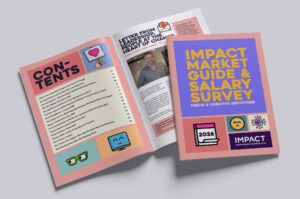
The Impact 2026 Market Report highlights a clear shift across creative, media, marketing and people-first industries: credential-based hiring is losing ground to capability-based hiring.
And for good reason.
The problem with “qualified”
Historically, “qualified” has meant:
- A specific academic background
- A set number of years in role
- Experience at recognised companies
- A tidy, upward career trajectory
But in a world shaped by AI, automation, rapid skill evolution and hybrid working models, those markers are becoming less predictive of future performance.
The report shows that organisations increasingly recognise that:
💪 Skills become obsolete faster than ever
♻️ Roles are blending across disciplines
🤖 AI is augmenting almost every function
🧠 Adaptability is more valuable than static expertise
What someone has done is no longer the best indicator of what they can do next.
The rise of capability-based hiring
Across the sectors covered in the report, we are seeing a move towards:
1️⃣ Learning velocity over legacy experience
Hiring managers are prioritising people who can absorb new tools, technologies and frameworks quickly, particularly where AI is involved.
2️⃣ Non-linear careers as strengths
Freelancing, portfolio careers, cross-functional moves and self-led projects are increasingly recognised as evidence of agility and initiative.
3️⃣ Alignment over assumption
Cultural contribution, leadership style, emotional intelligence and collaborative behaviours are being assessed more deliberately; not as “nice to have”, but as critical performance factors.
This shift is particularly visible in:
- Marketing roles blending creative and data fluency
- HR roles requiring tech literacy and strategic influence
- Support functions becoming commercially embedded
- Leadership roles requiring empathy alongside pace
✨ The report makes it clear: personality and adaptability are now performance drivers.
Why AI is accelerating this shift
Artificial intelligence is not replacing roles wholesale but it is reshaping them.
From content generation to data analysis to workflow automation, AI is changing how work gets done. The report highlights that the most resilient professionals are not those who resist AI, but those who can work alongside it.
This creates a new hiring lens:
- Can this person interpret AI outputs critically?
- Can they make nuanced decisions beyond automation?
- Do they bring judgement, context and emotional intelligence?
AI can optimise tasks. It cannot replace character, collaboration or culture-building. In fact, the more tools evolve, the more human capabilities matter.
The leadership factor
Another clear theme from the report is the rise of coaching-led leadership and people-first management. Candidates are increasingly selective. They are not just assessing the role but rather
- Leadership style
- Transparency
- Growth opportunity
- Alignment with values
Hiring for technical competence alone is no longer sufficient. Alignment with how a business operates under pressure, collaborates across functions, and develops people is becoming a competitive advantage.
The irony many businesses face
Many organisations say they want:
- Agile teams
- Innovation
- Adaptability
- Resilience
Yet still filter applications using rigid criteria that reward sameness.
If hiring processes prioritise uniformity over potential, businesses will struggle to build the diverse, future-ready teams they claim to want.
👉 The competitive advantage in 2026 will not belong to companies with the loudest employer brand. It will belong to those with the most accurate ability to identify real capability early.
What does this mean in practice?
Based on the trends outlined in the Impact 2026 Market Report, hiring teams should be asking:
❓Are we screening for indicators of learning ability, not just experience?
❓Are we recognising AI-augmented or freelance work as legitimate skill development?
❓Are we testing alignment and judgement, not just technical delivery?
❓Are our job descriptions built for future capability, not past precedent?
The market is evolving, expectations are shifting and roles are blending, making it clearer than ever that hiring needs to evolve with them. In 2026, the strongest teams won’t be built from the most impressive CVs. They’ll be built from the most adaptable, aligned and capable people.
✨ Want to download the Impact 2026 Market Report? Click here to read the full insights